The best things to do in the Galapagos Islands
Our local list of the best things to do in the Galapagos, island by island: what you can do on your own from town, what needs a guide or a cruise, and this week's cruise offers.
The short answer
The Galapagos is one of the few places on Earth where wild animals barely notice you. The best things to do here are simple: walk among nesting seabirds, snorkel with sea lions and turtles, see giant tortoises in the highlands, and, if you dive, drop in with schools of hammerhead sharks. Below is our local list, island by island, with what you can do on your own from town and what needs a boat and a guide.
One thing to know before you plan: the farther islands, where much of the most famous wildlife lives, are reached mainly on a cruise. The towns are lovely for a few days, but a cruise is how you see the islands most visitors never reach.
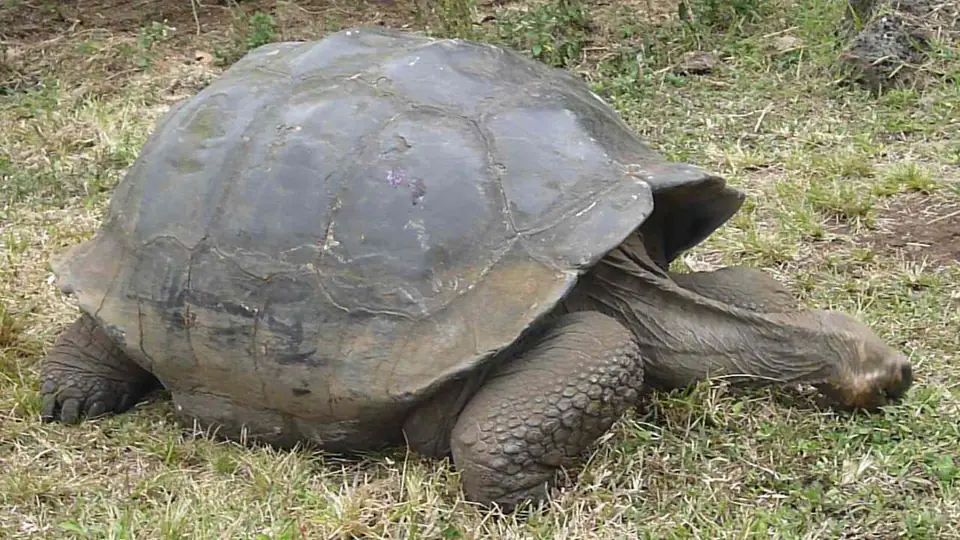
1. See giant tortoises in the wild (Santa Cruz)
In the green highlands of Santa Cruz, giant tortoises roam freely through pastures and forest. The El Chato reserve, near the village of Santa Rosa, is the classic place to walk among them. In Puerto Ayora, the Charles Darwin Research Station is open to the public and free, and it is a good first stop to learn how the tortoises were saved.
2. Walk to Tortuga Bay and swim at Las Grietas (Santa Cruz)
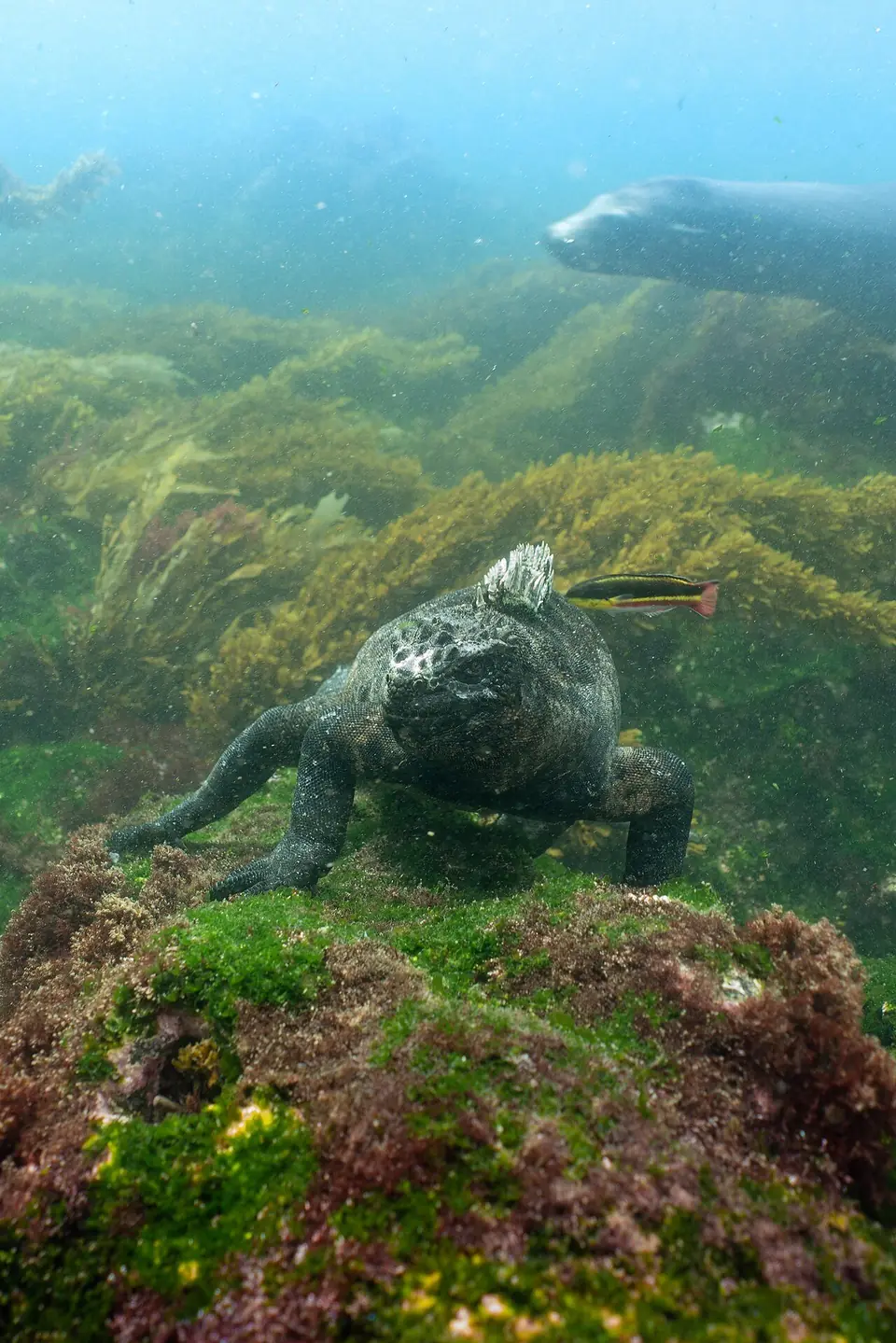
From Puerto Ayora, a paved 2.5 km trail leads to Tortuga Bay, a long white beach where marine iguanas rest on the sand. Entry is free, but you register at the gate at the start of the trail, which is open from 6:00 to 18:30. Las Grietas, a narrow canyon of clear water between lava walls, is a short water-taxi ride and a walk from town. Both are easy half days you can do on your own.
3. Snorkel with sea lions, turtles and penguins (Isabela)
Isabela, the largest island, is the place to slow down. Concha de Perla, about 100 m from the port, is a calm lagoon for snorkelling with sea lions and turtles. On a guided boat trip to Los Túneles you snorkel through shallow channels and arches of old lava, often with turtles, white-tip reef sharks, rays, sea lions and sometimes Galapagos penguins. On land, you can hike the rim of the huge caldera of the Sierra Negra volcano or walk out of town to the tortoise breeding centre and the Wall of Tears, a stone wall built by the prisoners of a former penal colony.
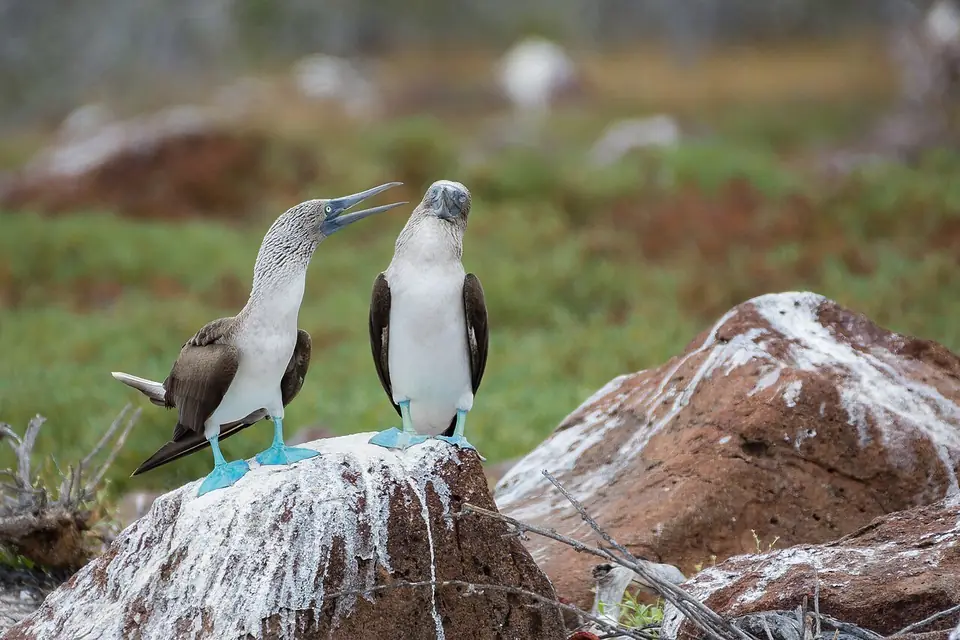
4. Meet blue-footed boobies and frigatebirds (North Seymour)
North Seymour, a small flat island north of Santa Cruz, is one of the best places to watch blue-footed boobies doing their funny courtship dance, a few steps from the trail, with magnificent frigatebirds puffing up their red throat pouches nearby. It is visited on guided day trips and on most cruises that start or end on Santa Cruz or Baltra.
5. Climb Bartolomé for the most famous view in the islands
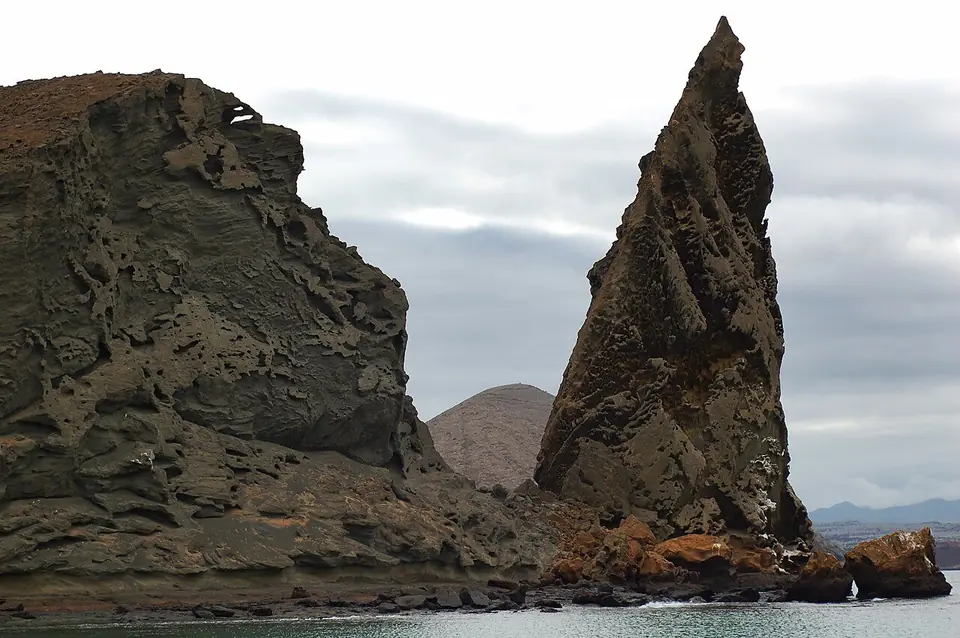
A wooden staircase leads to the top of Bartolomé, a young volcanic island, for the view of Pinnacle Rock and two curved beaches that appears on almost every Galapagos postcard. Below the rock, the snorkelling is excellent. Bartolomé is visited on cruises and on some guided day trips from Santa Cruz.
6. Watch the waved albatross dance (Española)
Española is the only place in the world where the waved albatross nests. The birds arrive around April, lay their eggs from mid-April to June, and the young leave at the end of December or early January, according to the Galapagos Conservancy. Seeing a pair perform their bill-clacking courtship dance is one of the great wildlife moments anywhere. Española is far from the towns, so you visit it on a cruise that includes the eastern or southern islands.
7. Snorkel or dive Kicker Rock (San Cristóbal)
From Puerto Baquerizo Moreno, the capital on San Cristóbal, a boat trip takes you to Kicker Rock (León Dormido), a tall rock split in two that rises straight out of the sea. Snorkellers and divers here often see sea turtles, rays and sharks. Back in town, sea lions sleep on the benches of the waterfront, and the beach at La Lobería is an easy walk or taxi away.
8. Dive Darwin and Wolf (for certified divers)
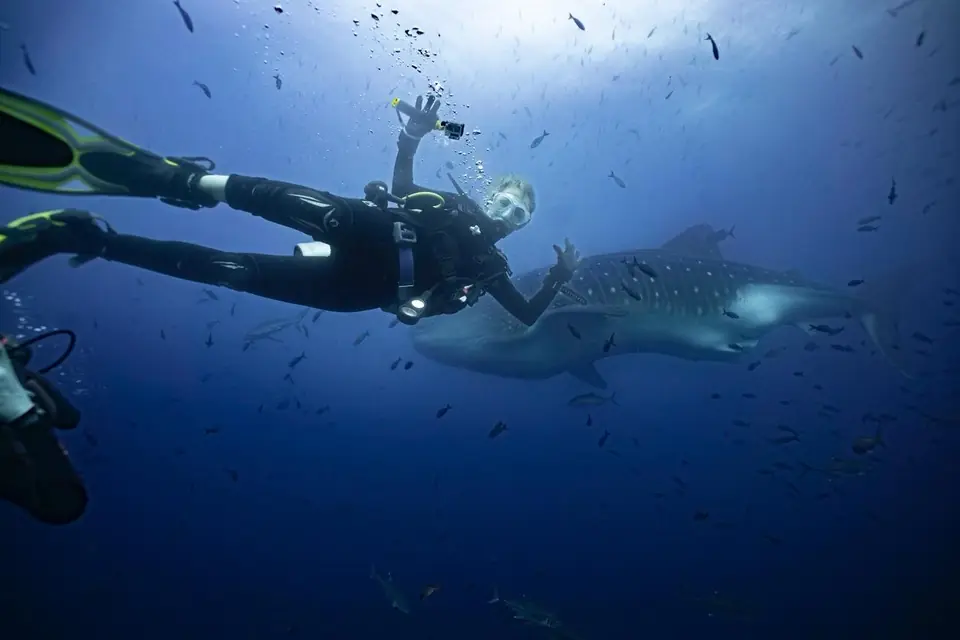
If you dive, the two small islands of Darwin and Wolf in the far north are the reason the Galapagos is on every diver's list: schools of hammerhead sharks, Galapagos and silky sharks, and whale sharks in season. They can only be reached on a dive liveaboard, because they are too far for day trips. Read the best time to dive Darwin and Wolf, see our dive liveaboards, or check this week's dates and prices. In this week's data, open spaces on a Darwin and Wolf liveaboard start at about US$4,500 per person.
Cruise or land-based trip?
Both are good, and we are happy to help with either. Here is our honest view:
- From a hotel in town you can do the free visits above on your own and book guided day trips. It suits travellers who want flexibility, but you spend more time on boats going out and back, and the farther islands (Española, Genovesa, Fernandina) are out of reach.
- On a small-ship naturalist cruise you sleep while the boat moves, wake up at a new island, and do two outings a day with a National Park guide: walks, snorkelling and panga rides. It is the easiest way to see the remote islands. Our naturalist cruises carry 16 to 20 guests.
- On a dive liveaboard you dive up to four times a day and reach Darwin and Wolf. Divers travelling with a non-diving partner can look at the Calipso, which runs both diving and naturalist itineraries.
Naturalist cruise prices and offers this week
In this week's data (21 November 2026), 4-day naturalist cruises start at US$2,845 per person and 8-day cruises at about US$6,845. These are some of the offers on the coming departures:
| Boat | Departure | Length | Offer price | Regular price |
|---|---|---|---|---|
| Calipso | 30 Nov 2026 | 4 days | US$1,423 | US$2,845 |
| New Galapagos Sea Star | 1 Dec 2026 | 6 days | US$3,023 | US$6,045 |
| New Galapagos Sea Star | 6 Dec 2026 | 5 days | US$2,423 | US$4,845 |
Prices are per person and change every week. For the current list, see this week's deals or all dates and prices.
Good to know before you go
- Park entry fee: since August 2024, international visitors pay US$200 (US$100 for children under 12) when they arrive. Visitors from Andean Community and Mercosur countries pay US$100. Children under 2 are free.
- Guides: in the protected areas of the National Park you must be with a guide authorised by the Park. The free visits near the towns, such as Tortuga Bay and the Darwin Station, can be done on your own.
- Distance: keep at least 2 metres from the animals, even when a curious sea lion comes closer to you. Never feed them, and don't use flash.
- When to go: there is something special in every month. See the best time to visit and dive and, for this season, El Niño 2026–27 and the Galapagos.
We are a small Galapagos travel agency run by Samira Saman. If you tell us what you most want to see, we will suggest the island route and the boat that fit your dates and budget, at no extra cost. Write to us.
Questions people ask
Can I visit the Galapagos without a cruise?
Yes. You can stay in Puerto Ayora, Puerto Villamil or Puerto Baquerizo Moreno, visit places like Tortuga Bay and the Charles Darwin Research Station on your own, and book guided day trips. The farther islands, such as Española, Genovesa and Fernandina, are visited mainly on cruises.
Do I need a guide in the Galapagos?
In the protected areas of the National Park, yes: you must be with a guide authorised by the Park. Some visits near the towns, such as Tortuga Bay and the Darwin Station, can be done on your own.
How much is the Galapagos park entry fee?
Since August 2024, international visitors over 12 pay US$200 and children under 12 pay US$100. Visitors from Andean Community and Mercosur countries pay US$100, and children under 2 are free.
Where can I see the waved albatross?
Only on Española, the one place in the world where it nests. The birds are there from about April to December, so plan a cruise that visits Española in those months.
Boats we recommend for this
- Grand Majestic · from US$2,145
- New Galapagos Sea Star · from US$2,423
- Natural Paradise · from US$2,245